Pulley Blocks
Pulley Blocks lists mechanical lifting and rope-guiding blocks used for hoisting, rigging, and load redirection in industrial and workshop settings. The category includes 10 indexed products with an average rating of 4.63 and mid-range pricing (about $33–$105, avg ~(price varies)), featuring brands like Greteefor
Top Products

Rocaris 25 Pack M15 Lifting Single Pulley Block
Rocaris
Mid-Range
Pulling Pal: Low Voltage & Network Cable Pulley
CableSlinger
Mid-Range
M20 single pulley block, 304 stainless steel wire rope pulley, heavy-duty
Mixiflor
Budget
M15 Single Pulley Block, 304 Stainless Steel Wire Rope Wheel
Mixiflor
Budget
Rocaris M15 Lifting Single Pulley Block 304 Stainless Steel
Rocaris
Mid-Range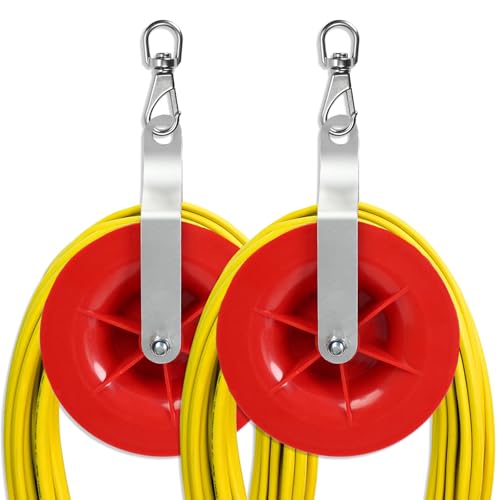
Cable installation pulley for low voltage and network cables
Furqery
Mid-Range
Heavy-Duty Double Block and Tackle Pulley System, 100ft rope
Greteefor
Mid-Range
Double Block and Tackle Pulley System with 250ft Rope
Greteefor
Mid-Range
Double Block and Tackle Pulley System with 100Ft x 1/2'' Rope
Greteefor
Mid-Range
Double Block and Tackle Pulley System with 200ft rope
Greteefor
Mid-RangeRoundups
Frequently Asked Questions
How do I choose the right pulley block for my lifting or rigging job?
Select a pulley block based on load capacity (working load limit), rope or cable diameter compatibility, number of sheaves (single vs. multi-sheave for mechanical advantage), construction material (steel, stainless steel, or nylon) and compatibility with your anchor points and connectors
What weight capacities and safety ratings should I look for?
Look for a clearly stated working load limit (WLL) and, when available, a breaking strength; choose a WLL with a safety margin above the expected load and ensure the block meets relevant industry standards for your application
Which pulley block materials are best for outdoor or marine use?
Stainless steel or corrosion-resistant coated steel is best for marine and outdoor use; aluminum offers weight savings with moderate corrosion resistance, while engineered plastics work for lighter loads and non-abrasive environments
How does the number of sheaves affect performance?
More sheaves allow multiple rope passes and greater mechanical advantage, reducing the force needed to lift a load but increasing complexity, size, and rope length required; choose the sheave count according to desired mechanical advantage and space constraints
What rope or cable types and diameters are compatible with pulley blocks?
Match the pulley sheave groove to the rope or cable type (synthetic rope, wire rope) and diameter specified by the manufacturer; using an undersized or oversized rope can cause slippage, accelerated wear, or reduced capacity
How should I inspect and maintain a pulley block for safe use?
Regularly inspect sheaves, bearings, side plates, pins and attachment points for wear, deformation, corrosion or cracks, lubricate bearings per manufacturer guidance, replace worn components, and remove from service if any safety-critical damage is found
Are there common compatibility issues with connectors and anchors?
Ensure the block's swivel eye, shackle, or hook opening matches the size and type of shackles, carabiners or anchors you plan to use and that those connectors are rated appropriately; avoid forcing mismatched parts that can misalign loads or reduce capacity