Sewage/Effluent Pumps
Sewage/effluent pumps for wastewater transfer, solids-handling, and dewatering applications, available in submersible and utility designs across budget to mid-range price points. Eleven indexed products average a 4.38 rating and an average price near (price varies); brands include Acquaer among others like Superior Pump and VEVOR
Top Products

Acquaer 1HP Sump Pump with 4345 GPH
Acquaer
Mid-Range
Acquaer 1HP Submersible Sump Pump with Float Switch
Acquaer
Mid-Range
Acquaer 1.2HP Sump Pump with Auto Float
Acquaer
Mid-Range
FOTING 3/4HP Submersible Sewage Pump, 4500 GPH, Cast Iron
FOTING
Mid-Range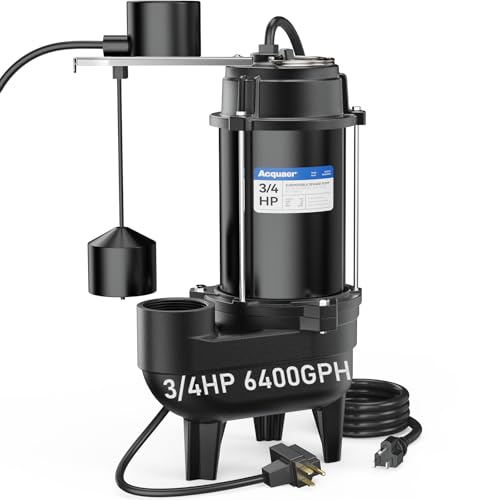
Acquaer 3/4 HP Submersible Sewage Pump with Float Switch
Acquaer
Premium
Acquaer 1/2HP Submersible Sump Pump 6000 GPH, Cast Iron, 2'' NPT
Acquaer
Premium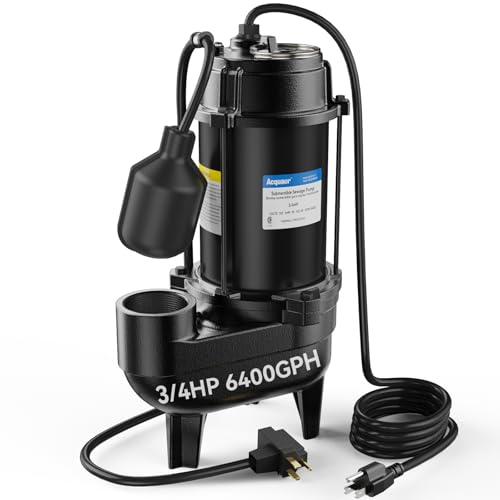
Acquaer 3/4 HP Submersible Sewage Pump, Cast Iron, 2" NPT
Acquaer
Premium
Acquaer 1/2HP Submersible Sewage Pump, 6000 GPH
Acquaer
Premium
Macerator Pump 900W with 4 inlets, 40ft lift, 48 GPM
VEVOR
Premium
LANCHEZ 1HP Submersible Sewage Pump with Float Switch
LANCHEZ
Premium
Superior Pump 93015-U Cast Iron Sewage Switch Kit 1/2 HP
Superior Pump
PremiumRoundups
Frequently Asked Questions
How do I choose the right sewage/effluent pump for my application?
Match pump type (submersible or pedestal) and horsepower to the expected flow rate (GPM) and total dynamic head (TDH) of your system; confirm solids-handling size, motor voltage, and whether the pump is rated for effluent (graywater) or sewage (waste with solids)
What flow rate and head do I need for a basement sump or septic transfer?
Calculate required GPM by summing fixture discharge rates or estimating wastewater volume and choose a pump whose pump curve meets that GPM at the calculated TDH (vertical lift plus friction losses); typical residential applications often require pumps rated 20–60 GPM and heads from 10–50 feet depending on layout
Should I buy a pump with solids-handling capability, and what size solids can it pass?
If the pump will handle raw sewage or waste containing solids, choose a solids-handling pump and check the maximum passable particle diameter (commonly 1/2 to 2 inches); smaller-pass models are fine for effluent/graywater without large solids
What materials and build features should I look for to ensure durability?
Look for corrosion-resistant materials such as stainless steel or cast iron housings, sealed motors with thermal overload protection, robust shaft seals (mechanical seals), and replaceable impellers or cutters for ease of maintenance
How do I maintain a sewage/effluent pump to prolong its life?
Follow a regular schedule to inspect seals, wiring, impeller condition, and float switches; clear debris from the intake, verify proper seating and alignment, and test automatic controls periodically; follow manufacturer service intervals for lubrication and seal replacement
What electrical and safety considerations should I know before installation?
Ensure correct voltage and amperage supply with a dedicated circuit and properly sized wiring, install a GFCI for protection where required, use a qualified electrician for hardwired pumps, and observe local codes for venting, check valves, and discharge routing
How much should I expect to spend and how do budget and features relate?
Prices for consumer and light commercial sewage/effluent pumps commonly range from under $100 for basic utility units to several hundred dollars for higher-capacity or stainless-steel solids-handling models; higher-cost units typically offer greater horsepower, solids capacity, durable materials, and built-in protection features