Stud Finders & Scanners
Stud finders and wall scanners for locating studs, metal, wiring, and pipes in walls and floors, including magnetic, electronic, and multi-sensor models. Catalog of 32 products averages a 4.37 rating with price tiers roughly $32–$210 (avg ~(price varies)), featuring brands like Franklin Sensors
Top Products

Stud Finder Wall Scanner 5-in-1 with LCD Display
JAXWQ
Budget
Stud Finder Wall Scanner 5-in-1 with HD LCD Display
JAXWQ
Mid-Range
Stud Finder Wall Scanner 5 in 1 with HD LCD Display
JAXWQ
Mid-Range
Franklin Sensors 710 Stud Finder with 13-Sensor Detection
Franklin Sensor
Mid-Range
ProSensor M150/X990 Stud Finder with 9 sensors
Franklin Sensors
Mid-Range
ProSensor 710+ Stud Finder with 13 sensors
Franklin Sensors
Mid-Range
ProSensor M210 Stud Finder with 13 sensors
Franklin Sensors
Mid-Range
Povlen 5-in-1 Stud Finder Wall Scanner
Povlen
Budget
Prosensor M210 Stud Finder with 13 Sensors
Franklin Sensors
Mid-Range
Stud Finder Wall Scanner Detector 5-in-1
Povlen
Mid-Range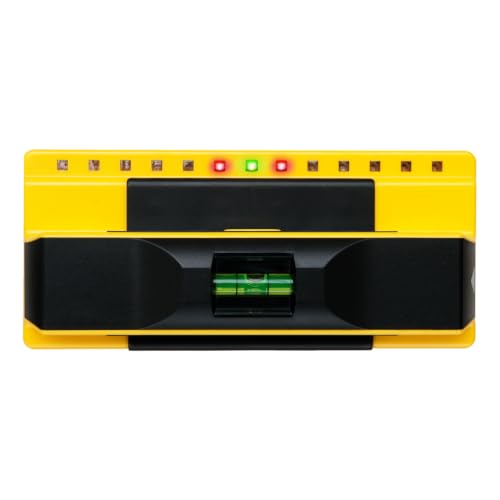
ProSensor 710+ stud finder with 13 sensors and built-in level
Franklin Sensors
Mid-Range
Stud Finder Wall Scanner Detector 5-in-1
Povlen
Budget
Zircon StudSensor A100 wall scanner and stud finder
Zircon
Budget
ProSensor T13 Stud Finder with 13 sensors
Franklin Sensors
Mid-Range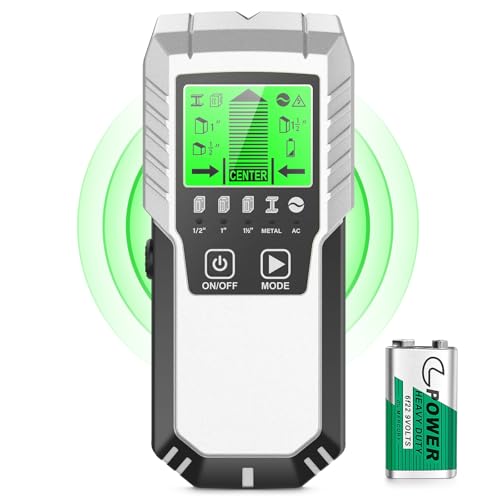
Stud Finder Wall Scanner Detector 5-in-1
Povlen
Mid-Range
Stud Finder Wall Scanner Detector - 5 in 1
Povlen
Budget
Stud Finder Wall Scanner 6-in-1 with HD LCD
TIMORUN
Budget
Zircon StudSensor A150 Wall Scanner and Stud Finder
Zircon
Budget
Line Laser with Stud Sensor (BDL190S) by Black & Decker
Black & Decker
Mid-Range
ProSensor T11/X1100 Stud Finder with 11 sensors
Franklin Sensors
Mid-Range
FNIRSI 6-in-1 Stud Finder Wall Scanner
FNIRSI
Mid-Range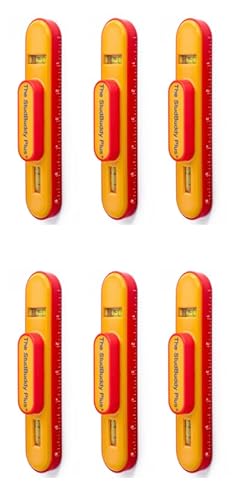
Plus Magnetic Stud Finder with Level by The StudBuddy
The StudBuddy
Mid-Range
Meapro Stud Finder Wall Scanner 5-in-1
Meapro
Budget
Zircon Multiscanner A200 Wall Scanner & Metal Detector
Zircon
Mid-RangeRoundups
- Best Stud Finders & Scanners for Wood And Metal Stud Detection (2026)
- Best Stud Finders & Scanners for Hanging Heavy Shelves (2026)
- Best Stud Finders & Scanners Under $200 (2026)
- Best Stud Finders & Scanners Under $100 (2026)
- Best Stud Finders & Scanners Under $50 (2026)
- Best Stud Finders & Scanners (2026 Guide)
Frequently Asked Questions
What types of stud finders and scanners are available and how do they differ?
There are basic electronic stud finders that detect changes in wall density to locate studs, multi-mode scanners that also detect live AC wiring and metal, and advanced radar/thermal scanners that map deeper structures. Basic models are simple and inexpensive, while multi-mode and radar units offer greater accuracy and feature sets for professional or complex jobs
Which features matter most when choosing a stud finder?
Key features include detection modes (wood/metal/wire), detection depth, accuracy or calibration options, display type (LED vs. digital), and additional aids like center-finding or live-wire alerts. Consider the wall materials you'll scan (plaster, drywall, tile) and whether you need deeper or multi-material detection
How accurate are stud finders and what can affect their performance?
Accuracy varies by technology and model; electronic sensors are reliable for standard drywall but can be thrown off by uneven plaster, insulation, or thick wall coverings. Calibration on a known empty area, slow steady passes, and using a multi-scan mode improve accuracy; for critical work, confirm findings with a small pilot hole
Are there budget options that still work well for home use?
Yes—budget electronic stud finders under $50 can be sufficient for basic drywall stud location and occasional home projects. For frequent professional use or scanning multiple materials, mid-range models with metal and live-wire detection are a better investment
How do I maintain and troubleshoot a stud finder?
Keep sensors clean, store the device in a dry place, and replace batteries when the device shows weak-power indicators. If readings are inconsistent, recalibrate per the manual, ensure flat contact with the wall, and try multiple passes or different modes to confirm results
Can stud finders detect plumbing and live electrical wiring?
Many multi-mode scanners can detect metal pipes and live AC wiring, but detection depth and reliability vary; metal detection may not distinguish pipe types and live-wire detection typically indicates presence rather than exact wiring layout. For safety, always assume wiring or plumbing could be present and use appropriate precautions
What should I consider for professional or heavy-duty scanning needs?
For frequent or complex jobs, choose scanners with deeper penetration, multiple detection technologies (e.g., radar or capacitive plus metal detection), large digital displays or mapping output, and durable construction. Also evaluate battery life, calibration options, and whether the unit provides raw-depth or mapping data for documentation