Surface Grinding Wheels
Surface grinding wheels for metal and hard-material finishing, including bonded abrasive discs and diamond/resin options for bench and surface grinders. The category averages a 4.50 rating across about 40 products and spans mid-range prices (roughly $33–$106), with brands like HONGUIS represented
Top Products

Oregon Grinding Wheel 5-3/4 in x 1/8 in Purple
Oregon
Mid-Range
DEWALT diamond cup grinding wheel 4-1/2-inch double row
DEWALT
Mid-Range
SALI 5pc Diamond Grinding Wheels for 4-1/2" Angle Grinder
SALI
Mid-Range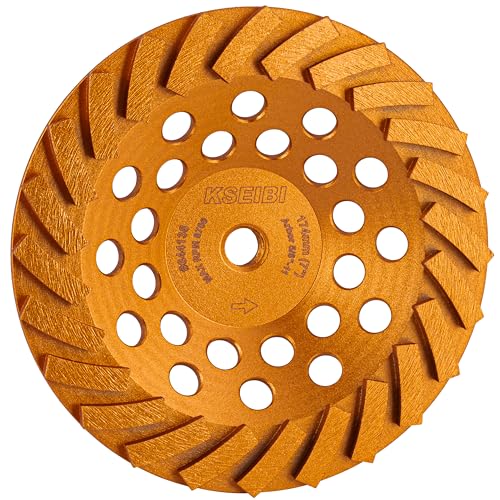
KSEIBI 7" Diamond Cup Wheel 24-Segment 5/8-11 arbour
KSEIBI
Mid-Range
7" Diamond Grinding Wheel for Concrete – 24 Double Row Segments, 30/40 Grit, Medium Bond, 7/8"-5/8" Arbor
EDiamondTools
Mid-Range
7" Diamond Grinding Wheel for Concrete, 24 Double Row Segments, 30/40 Grit, Medium Bond, 5/8-11 Arbor
EDiamondTools
Mid-Range
SALI 7 Inch Diamond Grinding Wheel 2pc 5/8-11 arbor
SALI
Mid-Range
7 inch concrete grinding wheel with 5/8-11 arbor
HONGUIS
Mid-Range
SALI 7 inch concrete grinding wheel with 20 diamond segments
SALI
Mid-Range
7 inch diamond cup wheel for concrete grinding 7/8-5/8 arbor
HONGUIS
Budget
Transitional Concrete Grinding Wheel, 5 inch, 4 mm body
HONGUIS
Budget
5 inch ceramic bond grinding wheel with 4 mm body
HONGUIS
Budget
Megatron 4" Diamond Cup Grinding Disc (CDB Technology) for Concrete
Trenion
Mid-Range
7 inch Diamond Cup Grinding Wheel for Concrete, 5/8-11 Arbor
HONGUIS
Mid-Range
7" High Performance Diamond Grinding Wheel for Concrete - #30/40 Grit, 10 Segments, 5/8-11 Arbor
EDiamondTools
Mid-Range
7" High Performance Diamond Grinding Wheel for Concrete
EDiamondTools
Mid-Range
5 inch Ceramic Bond Cup Grinding Wheel for Concrete Smoothing
HONGUIS
Budget
5 inch ceramic bond grinding cup wheel for concrete
HONGUIS
Budget
5 inch concrete grinding cup wheel with ceramic bond
HONGUIS
Budget
5 inch Diamond Cup Wheel, 4 mm ceramic bond for concrete
HONGUIS
Budget
Concrete Floor Polishing Pucks Diamond Resin Discs 3-Inch Hook & Loop
ComeFloor
Budget
Megatron 5" Diamond Cup Grinding Removing Disc Wheel
Trenion
Mid-Range
5 inch ceramic bond cup grinding wheel for concrete smoothing
HONGUIS
Budget
7 inch ceramic bond cup grinding wheel, 4 mm depth, 5/8-11 arbor
HONGUIS
Mid-RangeRoundups
Frequently Asked Questions
How do I choose the right surface grinding wheel for my application?
Match the wheel's abrasive type (aluminum oxide for ferrous metals, silicon carbide for nonferrous or cast materials), grit size (coarse for stock removal, fine for finishing), bond type (resin for general-purpose, vitrified for high-precision), wheel diameter and thickness to your grinder, and hardness grade to the material hardness
What wheel specifications should I check to ensure compatibility with my surface grinder?
Verify arbor hole size, outer diameter, thickness, maximum RPM rating that exceeds your grinder speed, and that the wheel shape (flat, recessed) and flange style match the machine's mounting system
Are there budget-friendly options and what price range should I expect?
Surface grinding wheels are available across a wide price range; many general-purpose and hobbyist wheels are commonly found under $50, while specialty or industrial-grade wheels cost more depending on abrasive, bond, and precision requirements
How do I maintain and store grinding wheels to ensure safety and performance?
Handle wheels carefully to avoid chips, store flat or upright in a dry area away from temperature extremes, inspect for cracks before mounting, dress wheels regularly to maintain concentricity and cutting action, and use appropriate guards and PPE during operation
What safety checks should I perform before using a surface grinding wheel?
Inspect the wheel for cracks or damage, perform a ring test if applicable, ensure correct mounting with proper flanges and torque, confirm wheel RPM rating exceeds grinder speed, and always use guards, eye protection, and appropriate respiratory protection
How does grit size affect finish and material removal rate?
Lower grit numbers (coarse) remove material faster but leave rougher finishes, while higher grit numbers (fine) produce smoother surfaces with slower material removal; choose grit based on whether you prioritize stock removal or surface finish
When should I choose a vitrified bond versus a resin bond wheel?
Choose vitrified bond wheels for high-precision grinding, high temperatures, and when rigidity and minimal bond loading are needed; choose resin (organic) bonds for general-purpose work, faster cutting, and situations where some bond flexibility helps absorb shock