Tile Grout Cleaners
Tile grout cleaners for homes and job-site use, including handheld scrubbing tools, powered grout brushes, and chemical cleaners for ceramic, porcelain, and stone. The 17 indexed products average a 4.33 rating and span budget to mid-range pricing (about $33–$156), with brands like Fanttik and Black Diamond Stoneworks represented
Top Products

Electric Spin Scrubber with 2 speeds & 4 replacement heads
AVCNUJ
Mid-Range
Grout Cleaner 2 Pack with Stand-Up Brush Attachment
Clean-eez Cleaning Products
Mid-Range
Grout cleaner for tile & stone, acid-free formula
Black Diamond Stoneworks
Mid-Range
SHIELDPRO Drill Brush Attachment Set 18pc
SHIELDPRO
Budget
Fuller Brush Grout & Tile Clean multipurpose spray
Fuller Brush
Budget
Qimedo Rechargeable Electric Scrubber with Long Handle
qimedo
Mid-Range
ULTRACARE Grout Refresh & Sealer (White)
Mapei
Budget
Prochem Ultrapac Extreme Professional Powder Cleaner
Prochem
Mid-Range
Wand Cordless Spin Scrubber with 12 replaceable heads
HOTO
Mid-Range
FILA cementitious grout haze remover, 1 gal
FILA Surface Care solutions
Budget
Gout cleaner for tile and stone with acid-free formula
Black Diamond Stoneworks
Premium
Grout & Tile Clean spray for bathroom and kitchen surfaces
Fuller Brush
Mid-Range
Fanttik G9 Nano Electric Spin Scrubber
Fanttik
Mid-Range
6000mAh cordless shower scrubber with 5in brush
Zordin
Mid-Range
Fanttik G9 Nano electric grout scrubber
Fanttik
Mid-Range
Pink electric spin scrubber with 3 speeds, 1200 rpm
Zordin
Mid-Range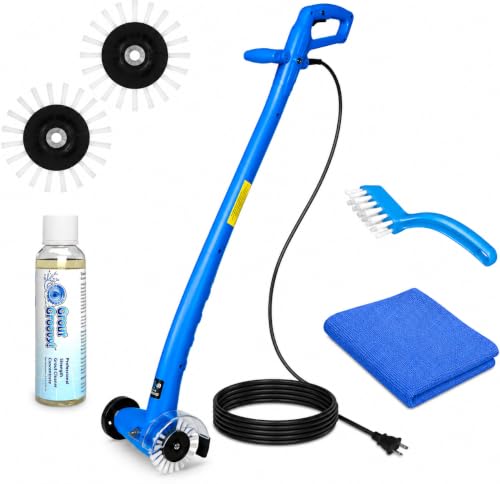
Grout Groovy! Electric Stand-Up Grout Cleaner
Grout Groovy!
PremiumRoundups
Frequently Asked Questions
How do I choose the right grout cleaner for my tile type?
Select a grout cleaner formulated for your tile material and grout color: acidic cleaners can remove mineral stains on ceramic or quarry tile but may damage natural stone; neutral pH or stone-safe cleaners are recommended for marble, travertine, and sealed surfaces. Check label directions for compatibility and test in an inconspicuous area before full use
What are the main forms of grout cleaners and how do they differ?
Grout cleaners come as liquids, gels, powders, and concentrated solutions; gels cling to vertical grout lines for longer dwell time, liquids are easier for large flat areas, powders are often mixed to a paste for heavy stains, and concentrates lower packaging volume but require mixing. Choose based on application area, stain severity, and whether you prefer ready-to-use or concentrated product
How much should I expect to spend on a grout cleaner for occasional home use?
Household grout cleaners typically range from budget options under $20 to professional-grade concentrates in the $20–$100 range; many consumer products fall in the $10–$40 range. Consider concentrate strength and coverage when comparing costs per use
Do grout cleaners require special tools or brushes to be effective?
A stiff nylon grout brush or a rotary scrub tool improves cleaning effectiveness by agitating grout pores; wire brushes can damage grout and tile and should be avoided. For large or heavily soiled areas, mechanical scrubbers or oscillating attachments paired with an appropriate cleaner reduce effort and improve results
Are grout cleaners safe for use around pets and children?
Safety varies by formulation; many contain chemicals that can be irritating or toxic if ingested or inhaled. Follow label instructions for ventilation, keep children and pets away during application and until surfaces are fully rinsed and dry, and store products securely out of reach
How do I remove mold and mildew stains from grout?
Use a cleaner labeled for mold and mildew or a diluted bleach solution for colorfast grout; apply, allow proper dwell time per instructions, scrub with a nylon brush, then rinse thoroughly. For persistent biological growth, consider improving ventilation and sealing grout after it is fully clean and dry
Should I seal grout after cleaning, and how often?
Sealing porous grout helps repel stains and extends time between deep cleanings; apply a grout sealer after the grout is completely clean and dry, typically following product cure recommendations. Reapplication frequency depends on traffic and sealer type but commonly ranges from annually to every 3–5 years for residential floors