Torque Gauges
Torque gauges for tools & industrial use measure and verify applied torque with digital or analog readouts, often in inch- or newton‑meter units. The category (14 products, avg rating 4.37) spans budget to mid-range options with average price about (price varies) and brands like ANPUDS represented
Top Products

1/2" Digital Torque Adapter with 10-200 Nm range
ANPUDS
Budget
1/2 in Digital Torque Adapter Set with Socket Adapters
XLIT
Budget
Digital Torque Adapter 1/2" Drive with Digital Readout
XLIT
Budget
1/2" Digital Torque Adapter with presets & data storage
ANPUDS
Budget
ACDelco heavy duty digital torque adapters with buzzer
ACDelco Tools
Mid-Range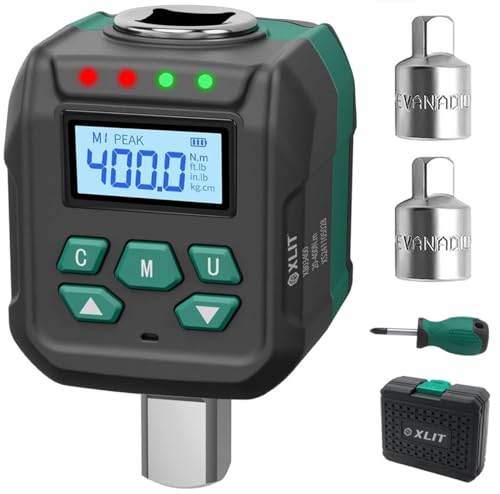
Digital Torque Adapter Set for 1/2" drive (1/4", 3/8")
XLIT
Budget
1/2 in Digital Torque Adapter (5-99.5 Ft-lb / 6.75-135 Nm)
ANPUDS
Budget
1/2-in Digital Torque Adapter w/ Data Storage & Presets
ANPUDS
Mid-Range
Digital Torque Adapter 12.5-250 Ft-lb, 1/2" Wrench, smart alerts
YIYEIE
Budget
Lisle torque angle meter 1/2 in drive universal fit
Lisle
Mid-Range
ACDelco 3/8 & 1/2 in Heavy Duty Digital Torque Adapters
ACDelco Tools
Mid-Range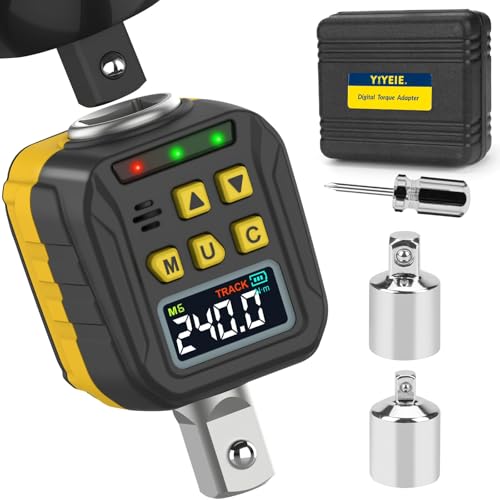
1/2" Drive Digital Torque Adapter with LCD Display
YIYEIE
Mid-Range
1/2" Digital Torque Adapter Set with 3/8" & 1/4" adapters
ANPUDS
Budget
NEIKO torque adapter for 3/4 drive with digital gauge
NEIKO
Mid-RangeRoundups
Frequently Asked Questions
How do I choose the right torque gauge for my application?
Select a gauge with a measurement range that covers the lowest and highest torques you expect, choose the appropriate unit (Nm, lb-ft, in-lb), prefer a resolution at least 1%–2% of the maximum value, and pick a form factor (handheld digital, dial, or bench) suited to how you'll use it
What accuracy and resolution should I look for?
For general maintenance and assembly, 1%–3% accuracy is typical; hobby or light work can accept lower accuracy while professional calibration or critical torque should use 1% or better; resolution should be fine enough to read meaningful steps (e.g., 0.1 Nm or 0.01 lb-ft depending on the scale)
Are digital torque gauges better than mechanical (dial) gauges?
Digital gauges generally provide easier reading, selectable units, peak/trace modes, and data hold/recording features, while mechanical dial gauges are simpler, require no batteries, and can be more durable in harsh environments; choose based on required features and working conditions
How often should I calibrate a torque gauge and how is calibration done?
Calibration frequency depends on usage intensity and requirements but commonly is annual for routine use or more frequently for critical applications; calibration is performed by comparing the gauge against a traceable standard (calibration service or lab) and adjusting or documenting deviations
What features should I consider for workshop vs. field use?
For workshops, look for bench-mount compatibility, higher capacity ranges, and data output (USB/serial); for field use prioritize portability, battery life, impact resistance, and easy-to-read displays or backlighting
How do I care for and store a torque gauge to maintain accuracy?
Avoid drops and shock, store in a protective case at stable temperatures, remove batteries for long-term storage, keep the sensor and connections clean, and follow the manufacturer's service and calibration schedule
What price range should I expect for torque gauges and what affects cost?
Prices vary by type and features: basic mechanical gauges and entry-level digital models are commonly under $100, while higher-accuracy, higher-capacity, or data-capable instruments cost more; factors affecting price include accuracy, range, build quality, and electronic features