Wall Timer Switches
Wall timer switches control lighting or equipment on a schedule, available as mechanical and digital wall-mounted units for residential and commercial use. The category spans budget through mid-range options (47 products, avg rating 4.44) with brands like Intermatic commonly represented
Top Products

Leviton countdown switch for bathroom lights
Leviton
Budget
Leviton countdown switch with 4 preset timers
Leviton
Budget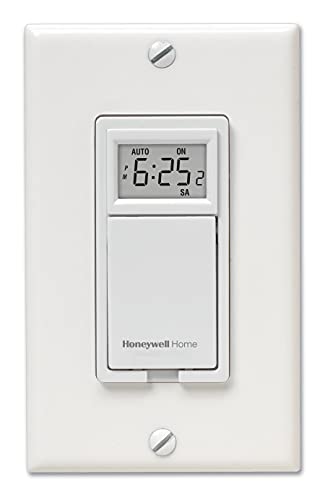
7-Day Programmable Light Switch Timer, White
Honeywell Home
Budget
Lutron Maestro Countdown Timer Switch for Fans and Lights MA-T51MN-WH
Lutron
Budget
Leviton countdown switch 2-4-8-12h, neutral required
Leviton
Budget
BN-LINK Countdown Wall Timer Switch for Exhaust Fan, 2 Pack
BN-LINK
Budget
ENERLITES 4-Hour Countdown Timer Switch 2-Pack
ENERLITES
Budget
ENERLITES 1-5-10-15-20-30 min countdown timer switch, blue LED, neutral wire
ENERLITES
Budget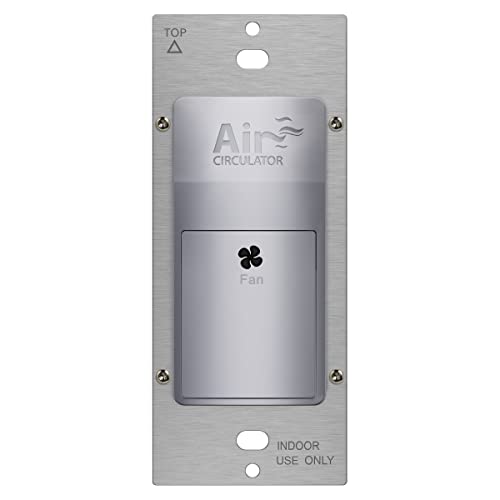
Air Circulator Timer Switch with Neutral Wire
TOPGREENER
Budget
Maestro Countdown Timer Switch for Fans and Lights
Lutron
Budget
Intermatic 30-Minute Countdown Wall Timer for Fans and Lights
Intermatic
Budget
Intermatic 15-minute countdown wall timer for fans and lights
Intermatic
Budget
Intermatic 60-minute in-wall countdown timer switch
Intermatic
Budget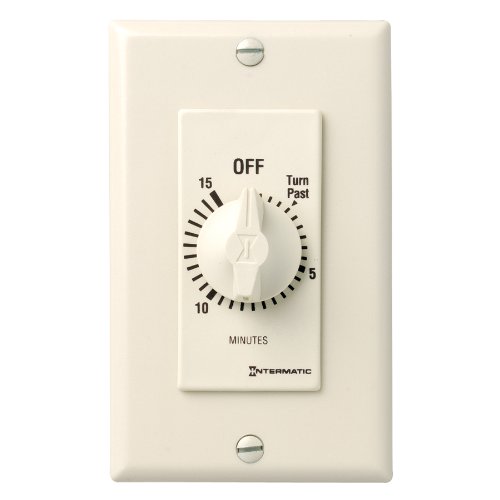
Intermatic 15-Minute In-Wall Timer for Fans and Lights, Almond
Intermatic
Budget
Intermatic 30-Minute Spring-Loaded Wall Timer, White
Intermatic
Mid-Range
Maestro Countdown Timer Switch for Fans and Lights
Lutron
Mid-Range
Intermatic 60-minute wall timer, white
Intermatic
Mid-Range
Intermatic 15-Minute Wall Timer for Fans and Lights, Ivory
Intermatic
Mid-Range
Intermatic 4-Hour Wall Timer, White
Intermatic
Mid-Range
Intermatic FD12HWC 12 Hour Timer for Lights and Fans
Intermatic
Mid-Range
SURAIELEC Digital Pool Timer 40A 120V 2HP (7-Day)
SURAIELEC
Mid-Range
Intermatic 12-Hour In-Wall Timer Switch with Hold, White
Intermatic
Mid-Range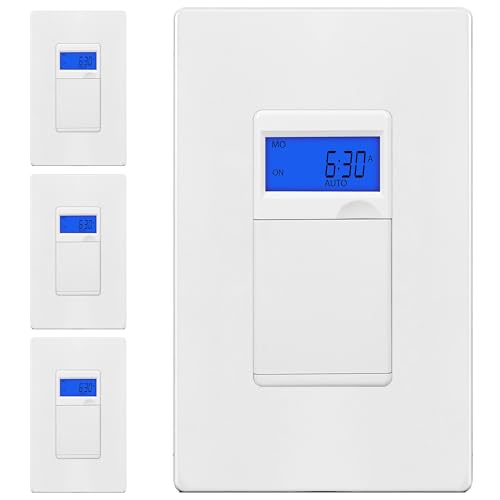
Enerlites 7-Day Digital In-Wall Timer Switch, 4 Pack
ENERLITES
Mid-Range
Honeywell PLS750C1000 timer switch with sunrise sunset
Honeywell
Mid-RangeRoundups
Frequently Asked Questions
How do I choose the right wall timer switch for my application?
Match the timer type (mechanical, digital, or programmable) to the level of control you need, verify compatibility with the load type (incandescent, LED, CFL, or motor loads), confirm the switch voltage and amperage ratings meet your circuit, and ensure the device fits your wall box and wiring (single-pole vs. 3-way)
Can wall timer switches control LED and CFL lighting?
Many modern wall timer switches support LED and CFL loads, but you must check the manufacturer's compatibility list and minimum load requirements because some timers expect a certain wattage or require a neutral or electronic-load-compatible design to avoid flicker or improper operation
What are the main differences between mechanical, digital, and smart wall timer switches?
Mechanical timers use a spring-driven dial for simple on/off schedules, digital timers provide more precise programmable schedules and holiday overrides, and smart timers connect to networks or hubs for remote control and integration; complexity, features, and wiring/neutral requirements increase from mechanical to smart
How do I know if a timer switch will work in a 3-way circuit?
Look for timer switches explicitly labeled for 3-way or multi-location use; these require specific wiring and may need a companion master/auxiliary unit or a neutral/line connection, so review the installation instructions and wiring diagram before purchase
What wiring and installation considerations should I plan for?
Turn off power before installation, confirm you have the necessary conductors (line, load, neutral, ground) in the box, check the switch dimensions and depth for the wall box, and if you are unsure about wiring or local code, hire a licensed electrician
How long do wall timer switches typically last and what maintenance do they need?
Durability varies, but properly installed mechanical or electronic timers often last several years; maintenance is minimal—keep the cover clean, check for loose connections periodically, and replace the unit if it fails to hold time, operate reliably, or shows signs of overheating
What price range should I expect for wall timer switches and how does price relate to features?
Basic mechanical timers are typically the most affordable, digital programmable timers occupy a mid-range, and smart or specialty timers cost more; price generally reflects feature set (scheduling flexibility, connectivity, load compatibility) rather than durability alone