Well Pumps
Well pumps for residential and light commercial water delivery and pressure applications, including submersible, jet, and booster models. The 40 indexed products average a 4.25 rating and range roughly $66–$400, with brands like VEVOR among the top-listed. These cover budget to mid-range options for common well and water-transfer needs
Top Products

FLUENTPOWER 1.5HP Portable Garden Transfer Pump
FLUENTPOWER
Mid-Range
VEVOR Deep Well Submersible Pump 0.5HP 230V
VEVOR
Premium
FLUENTPOWER 1HP Portable Garden Transfer Pump
FLUENTPOWER
Mid-Range
Acquaer shallow well jet pump 1/2HP cast iron 25ft
Acquaer
Premium
FLUENTPOWER 1HP Portable Garden Transfer Pump
FLUENTPOWER
Premium
RL2A 2-Gallon Inline Pressure Tank for Well Pumps, Almond
Red Lion
Mid-Range
Automatic garden booster pump with prefilter, 1.5 HP, 1300 GPH
FLUENTPOWER
Premium
VEVOR Deep Well Submersible Pump 1HP 115V, 37GPM, 207ft
VEVOR
Premium
LANCHEZ shallow well garden pump 1/2 HP, 960 GPH
LANCHEZ
Mid-Range
FOTING 1HP Portable Shallow Well Pump
FOTING
Mid-Range
RL4A 4.5-Gallon Inline Pressure Tank for Well Pumps
Red Lion
Mid-Range
Acquaer 1.5HP Portable Shallow Well Pump, Stainless Steel
Acquaer
Premium
VEVOR Deep Well Submersible Pump 1.5HP 230V 37GPM 276ft
VEVOR
Premium
VEVOR Deep Well Submersible Pump 1.5HP 115V 37GPM 276ft
VEVOR
Premium
VEVOR Deep Well Submersible Pump 3HP 230V 37GPM 640ft
VEVOR
Premium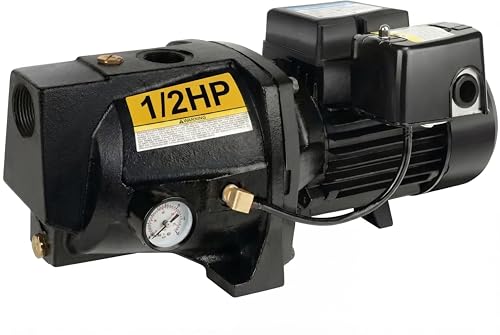
Acquaer shallow well jet pump 1/2hp 115/230v
Acquaer
Premium
Submersible Deep Well Pump 1HP 115V 33 GPM 207 ft
VIVOGROW
Premium
VEVOR Deep Well Submersible Pump, 2HP, 230V/60Hz
VEVOR
Premium
VEVOR 1 HP Shallow Well Pump with Pressure Tank
VEVOR
Premium
Acquaer 1/2HP Convertible Well Pump with Ejector Kit
Acquaer
Premium
Aquastrong 1.6 HP Portable Shallow Well Pump
AQUASTRONG
Premium
VEVOR 1 HP Shallow Well Pump with Pressure Tank
VEVOR
Premium
LANCHEZ 1.6 HP Shallow Well Pump with Pressure Tank
LANCHEZ
Premium
Aquastrong shallow well jet pump 1.6 HP with pressure tank
AQUASTRONG
PremiumRoundups
Frequently Asked Questions
How do I choose the right type of well pump for my application?
Select by well depth and water demand: shallow jet pumps for wells under ~25 feet, submersible pumps for deeper wells, and booster/centrifugal pumps for pressurizing systems or moving water horizontally. Match pump flow (GPM) and head (feet) to your household or irrigation needs and confirm compatibility with your power supply (120V/240V, single- or three-phase)
What specifications should I check to know a pump will meet my flow and pressure needs?
Compare the pump’s maximum flow rate (gallons per minute), total dynamic head or maximum head (feet), and pressure switch/settings if used with a pressure tank; use the pump curve to verify flow at the head your system requires. Also check voltage, horsepower (HP), and materials for corrosion resistance
What is the typical price range and how does price relate to quality?
Well pumps in the tools & industrial category commonly span from lower-cost consumer models to higher-priced heavy-duty units; averages here are around $170, but expect a broad range depending on type, horsepower, and materials. Higher-priced models often use more durable materials, higher-performing motors, or include features like built-in thermal protection and stainless steel components
What maintenance and care does a well pump require to ensure reliable operation?
Regularly inspect electrical connections, pressure switches, and check the pressure tank air charge; flush and test water quality to limit sediment and corrosion. For submersible pumps, ensure proper well sealing and have the pump inspected if flow or pressure drops or if unusual noise occurs
How do I determine whether a pump is compatible with my existing well and plumbing?
Confirm well casing diameter for submersible fit, discharge pipe size and threading, voltage and phase match your electrical supply, and that the pump’s inlet/outlet and mounting match your system; review pump curves and installation manuals for required clearances and wiring details
What materials and construction features should I look for for longevity in different water conditions?
Choose stainless steel or bronze wetted parts for corrosive or mineral-rich water, cast iron bodies for general durability, and sealed motors with thermal overload protection for reliability. For abrasive or sandy water, select pumps with harder wear components and consider pre-filtration
When should I call a professional to install or service a well pump?
Hire a licensed well pump technician for initial well sizing and electrical hookups, submersible pump removal/installation, troubleshooting complex electrical or pressure issues, or when you lack proper tools and experience to avoid safety risks and damage to the well system