StarTech PCIe USB 2.0 Card - 4 Port Low Profile vs PCIE USB 3.0 Expansion Card (7 ports)
Overall winner: PCIE USB 3.0 Expansion Card (7 ports)
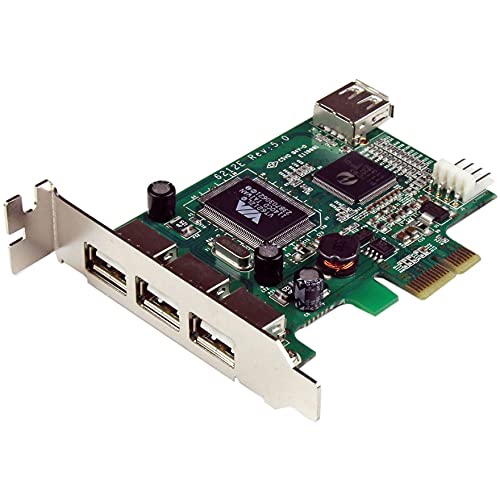
StarTech PCIe USB 2.0 Card - 4 Port Low Profile
StarTech 4-port PCIe USB 2.0 card offers 3 external and 1 internal USB 2.0 ports with up to 480Mbps transfer and 500mA per port. Backward compatible with USB 1.0/1.1 devices and plug-and-play ready, with a low-profile design. One customer notes good compatibility for PS3 fight sticks on Windows
Pros
- low-profile design
- 3 external + 1 internal USB 2.0 ports
- plug-and-play compatible
- per-port power up to 500mA
Cons
- some compatibility issues reported
- backplane fit issues mentioned by customers

PCIE USB 3.0 Expansion Card (7 ports)
A PCIe USB 3.0 expansion card with 7 ports (5 Type-A, 2 Type-C) for Windows, macOS, and Linux. Enables plug-and-play USB expansion with easy installation, valued for quality and versatility, though some users report port and reliability issues
Pros
- 7-port USB 3.0 expansion
- Includes Type-C and Type-A ports
- Plug-and-play compatibility
- Easy installation
Cons
- Some ports may fail after extended use
- Mixed reports on speed vs USB 3.0
- Possible USB A port blockage or driver issues
Head-to-Head
| Criteria | Winner |
|---|---|
| Price | YEELIYA |
| Durability | StarTech |
| Versatility | YEELIYA |
| User Reviews | Tie |