BIQU SKR Mini E3 V3.0 board for Ender-3 series vs BIGTREETECH SKR Pico V1.0 controller board for Voron printers
Overall winner: BIQU SKR Mini E3 V3.0 board for Ender-3 series
Key Differences
BIQU SKR Mini E3 V3.0 (A) is marketed for Ender-3 series and notes quiet operation and easy installation with a higher rating and many more reviews; SKR Pico V1.0 (B) is smaller, Raspberry Pi compatible with integrated 4-axis TMC2209 UART drivers for multi-axis setups. Pick A if you want an Ender-3–focused, well-reviewed 32-bit board; pick B if you need a compact, Pi-friendly controller with built-in UART drivers for Voron-style builds

BIQU SKR Mini E3 V3.0 board for Ender-3 series
3D printer control board upgrade with larger heatsink and 3 cooling fans. Improves quiet operation and compatibility with Ender-3, Ender-3 Pro, Ender-3 V2, Ender-5 and Ender-5 pro. Customer insight highlights ease of installation and quietness with mixed feedback on functionality
Pros
- larger heatsink area
- quieter operation
- easy to install
- 3 controllable cooling fans
Cons
- mixed feedback on functionality/print quality
- some reports of compatibility issues with Ender-3 v2
- some units stopped working
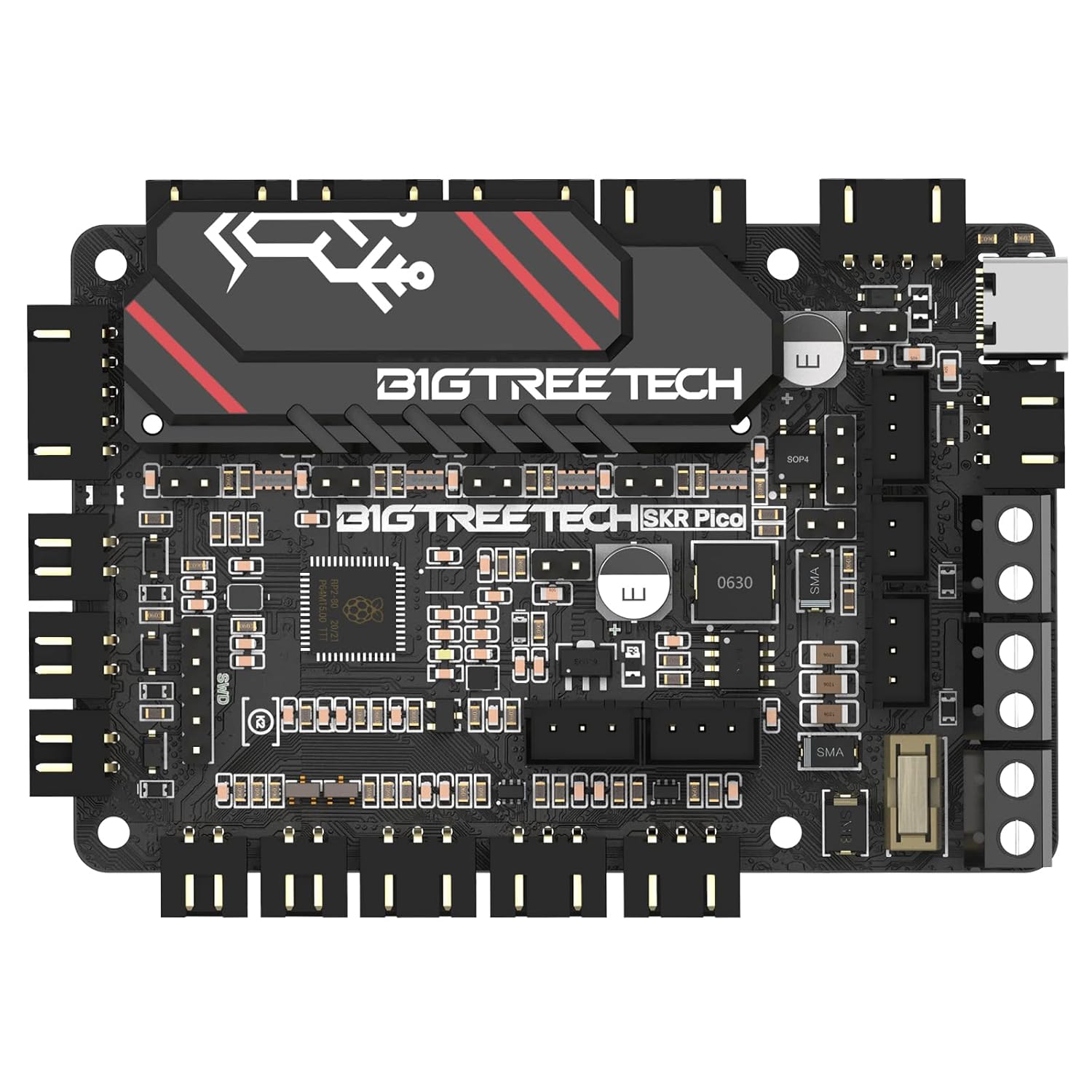
BIGTREETECH SKR Pico V1.0 controller board for Voron printers
Integrated 4-axis UART driver board for Voron printers with Raspberry Pi frame compatibility. Supports easy UART connections and compact design, noted for quality and value by customers
Pros
- Integrated 4-axis TMC2209 UART drivers
- Raspberry Pi frame compatibility
- Compact, small form factor
- Easy UART connections
Cons
- Mixed feedback on documentation
- Some reports of failed joints
Head-to-Head
| Criteria | Winner |
|---|---|
| Price | BIQU |
| Durability | Tie |
| Versatility | BIGTREETECH Direct |
| User Reviews | BIQU |