PCIe SATA Card 8 Port with Cables and Low Profile Bracket vs GLOTRENDS 16-Port PCIe X1 SATA Expansion Card
Overall winner: GLOTRENDS 16-Port PCIe X1 SATA Expansion Card
Key Differences
MZHOU's card provides 8 SATA 3.0 ports and includes eight SATA cables plus a low-profile bracket, making it a compact, lower-priced option for adding drives. GLOTRENDS offers 16 SATA ports, broader OS support (Windows, Mac OS, Linux) and a power splitter cable for larger arrays but has reports of slower data speeds and lacks hardware RAID

PCIe SATA Card 8 Port with Cables and Low Profile Bracket
PCIe SATA card adds 8 SATA 3.0 6 Gbps devices to a computer. Includes 8 SATA cables and a low profile bracket for slim PCs. Built with ASM1064+JMB575 for stability and hot-swap support
Pros
- adds 8 SATA 3.0 ports
- includes 8 SATA cables
- low profile bracket included
- hot-swap support
Cons
- requires PCIe slot availability
- may require bracket change for slim PCs
- no customer insight provided
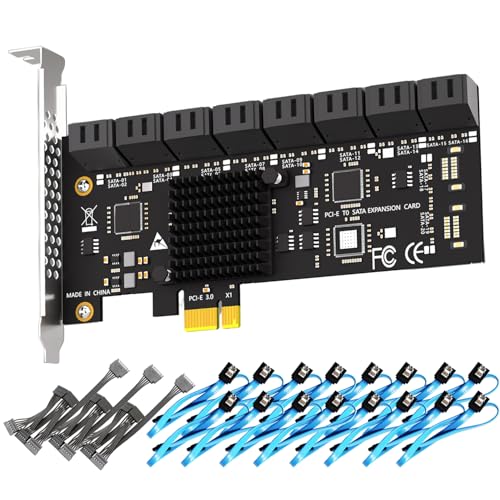
GLOTRENDS 16-Port PCIe X1 SATA Expansion Card
PCIe X1 SATA III expansion card supporting 16 drives; enables large storage pools and software RAID on Windows, Mac OS, and Linux. Includes power splitter cable for additional drives
Pros
- 16 SATA ports for expanded storage
- Supports Windows, Mac OS, and Linux
- Includes power splitter cable
- PCIe 3.0 x1 upstream up to 8GT/s
Cons
- No hardware RAID support
- Some users report slower data speeds
- Booting capability receives mixed feedback
Head-to-Head
| Criteria | Winner |
|---|---|
| Price | MZHOU |
| Durability | Tie |
| Versatility | GLOTRENDS |
| User Reviews | GLOTRENDS |