RIITOP PCIe SATA Card 6 Ports vs GLOTRENDS 16-Port PCIe X1 SATA Expansion Card
Overall winner: GLOTRENDS 16-Port PCIe X1 SATA Expansion Card
Key Differences
GLOTRENDS (A) offers 16 SATA ports and includes a power splitter cable, making it better for large storage builds and multi-OS support; RIITOP (B) provides 6 SATA 3.0 ports with a plug-and-play, driver-free setup and uses a PCIe x4 interface, better for smaller expansions or simpler installs. Choose A if you need many ports and cross-platform support; choose B if you want fewer ports and simpler driver-free installation but be aware of some reported bootable support issues

RIITOP PCIe SATA Card 6 Ports
RIITOP PCIe to SATA expansion card adds 6 SATA 3.0 ports via PCIe x4/x8/x16. Plug and play with AMS1166 chipset for stable compatibility and up to 6Gbps per port. Customers note driver-free setup and out-of-the-box functionality, with occasional bootable support issues
Pros
- adds 6 SATA 3.0 ports
- plug and play installation
- driver-free setup
- supports PCIe x4/x8/x16
Cons
- some bootable support issues reported
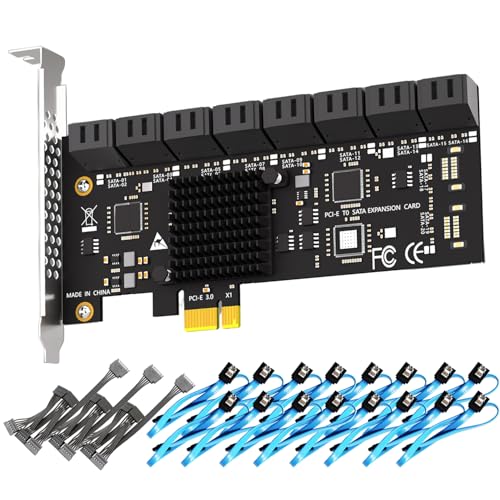
GLOTRENDS 16-Port PCIe X1 SATA Expansion Card
PCIe X1 SATA III expansion card supporting 16 drives; enables large storage pools and software RAID on Windows, Mac OS, and Linux. Includes power splitter cable for additional drives
Pros
- 16 SATA ports for expanded storage
- Supports Windows, Mac OS, and Linux
- Includes power splitter cable
- PCIe 3.0 x1 upstream up to 8GT/s
Cons
- No hardware RAID support
- Some users report slower data speeds
- Booting capability receives mixed feedback
Head-to-Head
| Criteria | Winner |
|---|---|
| Price | GLOTRENDS |
| Durability | Tie |
| Versatility | GLOTRENDS |
| User Reviews | GLOTRENDS |