Gear Oils
Gear oils for automotive and garage use, including manual transmission, differential, and axle lubricants formulated for pressure and extreme shear conditions. The category spans budget through premium options (about $32–$344, average $89) with brands like Red Line and Valvoline well represented. Average rating across 59 products is 4.79
Top Products

Valvoline Flexfill SAE 75W-90 Full Synthetic Gear Oil 1 QT (4-Pack)
Valvoline
Mid-Range
Valvoline Gear Oil 75W-140 Full Synthetic, 1 QT (Case of 4)
Valvoline
Mid-Range
Red Line synthetic gear oil 75W90 GL-5 for LSDs (1 qt, 2 pack)
Red Line
Mid-Range
Royal Purple Max Gear 75W-90 synthetic gear oil (2-pack)
Royal Purple
Mid-Range
Red Line MT-90 75W-90 GL-4 manual transmission lubricant (1 Quart, 4 Pack)
Red Line
Mid-Range
Red Line 75W85 GL-5 Gear Oil for Hypoid Differentials
Red Line
Mid-Range
Valvoline SynPower 75W-140 Full Synthetic Gear Oil 1 QT (Pack of 4)
Valvoline
Mid-Range
Triax Synergy Gear Max 75W-90 GL-5 Limited Slip lubricant
Triax
Budget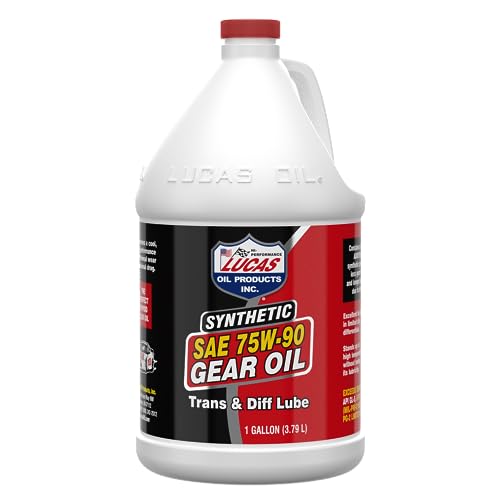
Lucas Oil Synthetic SAE 75W-90 Gear Oil - 1 Gallon
LUCAS
Mid-Range
Valvoline SynPower 75W-90 Full Synthetic Gear Oil, 1 QT (2-pack)
Valvoline
Budget
Triax Gear Premium LS 80W-90 GL-5 Limited Slip Ready (1 Gallon)
Triax
Budget
Star Brite lower unit gear oil 80W-90
STAR BRITE
Mid-Range
Red Line MT-85 gear oil 75W-85 GL-4, 1 quart (2 pack)
Red Line
Mid-Range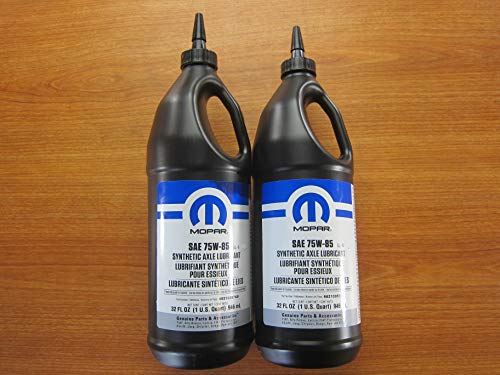
Mopar OEM SAE 75W-85 Synthetic Axle Lubricant (2 qt)
Mopar
Mid-Range
Mercury OEM High Performance Gear Lube with Hand Pump
MERCURY
Budget
ULTRA 1PLUS SAE 75W-90 Synthetic Gear Oil GL-5
ULTRA 1PLUS
Mid-Range
Honda shaft drive gear oil SAE 80W90 (pack of 6) with funnel and rag
THE EDWARDS MOTORSPORTS & RVS COMPANY
Budget
Penn Grade 1 GL-4 Gear Oil SAE 80W-90, 1 Quart (4 Pack)
PENN GRADE1
Budget
TRIAX Synergy Gear MT 75W-80 GL-4 Full Synthetic Transmission Fluid
Triax
Mid-Range
Red Line 75W90 Gear Oil - 1 Quart (2 Pack)
Red Line
Mid-Range
Ultra1Plus SAE 75W-90 Synthetic Gear Oil 3 Pack QT
ULTRA 1PLUS
Budget
ULTRA 1PLUS SAE 80W-90 Gear Oil for GL-5
ULTRA 1PLUS
Budget
Penn Grade 1 gear oil GL-4 SAE 80W-90, 1 qt (6 pack)
PENN GRADE1
Mid-Range
Kroil Penetrating Oil with Silicone, 16.5oz Aerosol
KROIL
BudgetRoundups
Frequently Asked Questions
How do I choose the right gear oil for my vehicle or equipment?
Check the manufacturer’s service manual for the required viscosity (e.g., SAE 75W-90) and performance specs (API GL-4, GL-5, or gear-specific standards); match synthetic vs. mineral based on operating temperature and load, and choose additives (friction modifiers, limited-slip) if your differential or gearbox requires them
What is the difference between synthetic and conventional gear oils, and when should I use each?
Synthetic gear oils generally offer better low-temperature flow, higher thermal stability, longer service life, and improved protection under heavy loads; conventional (mineral) oils can be adequate for older vehicles or low-stress applications and are usually less expensive, so choose synthetic for performance or extended-change intervals and conventional when following OEM guidance or budget constraints
Do gear oils differ for limited-slip differentials and do I need a special formulation?
Yes—many limited-slip differentials require gear oils with friction modifiers or specific limited-slip additives to prevent chatter and ensure proper clutch engagement; always confirm the differential’s requirement and use a compatible limited-slip or additized product when specified
How often should I change gear oil, and what factors affect the interval?
Change intervals vary by vehicle and use: typical passenger car differentials can range from 30,000 to 100,000 miles, while severe duty, towing, racing, or off-road use shortens intervals; check the OEM schedule and consider inspecting fluid for contamination, metal particles, or viscosity breakdown to decide more frequent changes
What viscosity rating should I use for cold weather or high-temperature environments?
Use lower W-rated gear oils (e.g., 75W- or 80W-) for better cold-start flow and higher multi-grade or heavier single-grade oils for sustained high-temperature stability; follow the vehicle’s recommended SAE grade and choose a synthetic multi-grade if you need a wider operating temperature range
Can I mix different brands or types of gear oil?
Mixing oils with different base stocks or additive chemistries can be done in a pinch but is not recommended long-term, as it may dilute additive effectiveness or cause compatibility issues; when possible, stick to the same specification and ideally the same product or consult the OEM for approved fluids
What are common signs that my gear oil needs attention or replacement?
Look for unusual noise or whining from the differential or gearbox, visible metal particles on the drain plug, burnt or very dark fluid, leaks, or degraded shifting performance—any of these indicate inspection and likely fluid change are needed