Clinical Psychology (Books)
This category collects clinical psychology books tailored for home comfort and decor contexts, including practical guides and reference texts for self-care, therapy-adjacent spaces, and wellbeing-inspired interior use. Titles span budget through premium ranges (avg $124) and feature authors such as Allan M. Leventhal among 34 indexed products with an average 4.74 rating
Top Products

Mastering Your Adult ADHD: A CBT Treatment Workbook
Steven A. Safren, Susan E. Sprich, Carol A. Perlman
Mid-Range
Unified protocol for transdiagnostic treatment of emotional disorders: workbook
David H. BarlowShannon Sauer-Zavala
Mid-Range
Clinical Handbook of Co-existing Mental Health and Substance Problems
Amanda Baker, Richard Velleman, Wayne Hall, Michael Farrell
Mid-Range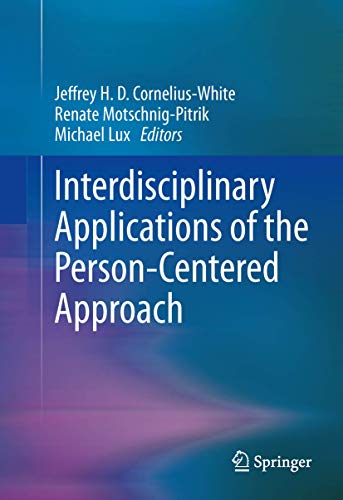
Interdisciplinary Applications of the Person-Centered Approach
Cornelius-White
Mid-Range
Preschool Issues in Autism (Current Issues in Autism)
Eric Schopler, Mary E. Van Bourgondien, Marie M. Bristol
Mid-Range
Discursive Research in Practice: New Approaches to Psychology and Interaction
Alexa Hepburn, Sally Wiggins
Mid-Range
Eating and its Disorders (Wiley Series in Clinical Psychology)
John R. E. Fox
Premium
Learning and Cognition in Autism (Current Issues in Autism)
Eric Schopler, Gary B. Mesibov
Mid-Range
Developmental Assets and Asset-Building Communities
Richard M. Lerner, Peter L. Benson
Premium
The Causes and Cures of Criminality (Perspectives on Individual Differences)
H. J. Eysenck
Mid-Range
Mobilizing Adults for Positive Youth Development
E. Gil Clary, Jean E. Rhodes
Mid-Range
Guide to Psychological Assessment with African Americans
Lorraine T. Benuto, Brian D. Leany
Mid-Range
Social Referencing and the Social Construction of Reality in Infancy
S. Feinman
Premium
Psychological Responses to Eating Disorders and Obesity: Recent and Innovative Work
Julia Buckroyd, Sharon Rother
Premium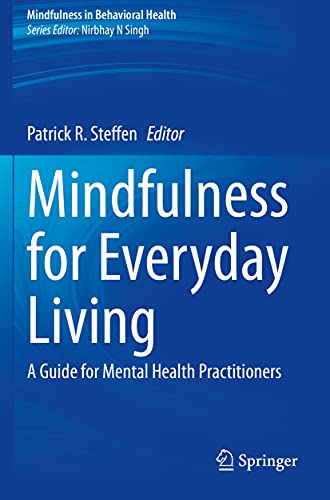
Mindfulness for Everyday Living: A Guide for Mental Health Practitioners
Patrick R. Steffen
Mid-Range
Surviving, Existing, or Living (IPSAP Book Series)
Pamela R. Fuller
Premium
Poverty and Psychology: Global to Local Practice
Stuart C. Carr, Tod S. Sloan
Premium
Grifting Depression: Psychiatry's Failure as a Medical Science
Allan M. Leventhal, Sharaine Ely
Mid-Range
How to Become a Clinical Psychologist (How to become a Practitioner Psychologist)
Laura Golding, Judith Moss
Premium
Wednesday's Child: Research into Women's Neglect, Abuse, and Depression
Antonia Bifulco, Patricia Moran
Mid-Range
Psychology and Buddhism: From Individual to Global Community (International and Cultural Psychology)
Kathleen H. Dockett, G. Rita Dudley-Grant, C. Peter Bankart
Premium
Ghodse's Drugs and Addictive Behaviour: A Guide to Treatment
Hamid Ghodse
Premium
Bayley-III Clinical Use and Interpretation (Practical Resources for the Mental Health Professional)
Lawrence G. Weiss, Thomas Oakland, Glen P. Aylward
Mid-Range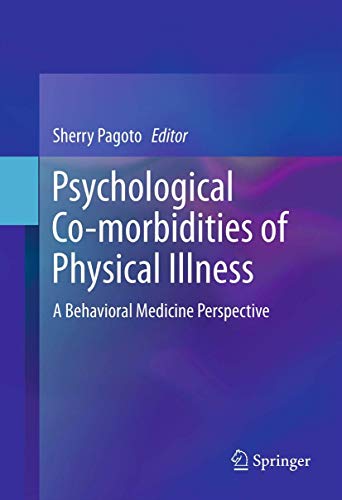
Psychological co-morbidities of physical illness: a behavioral medicine perspective
Sherry Pagoto
PremiumRoundups
Frequently Asked Questions
How do I choose a clinical psychology book for home reading or decor?
Look for books labeled for general readers or self-help if you want accessible explanations; choose textbooks or clinical handbooks if you need depth. Check the table of contents, sample chapters, and author credentials to ensure topics (e.g., assessment, therapy approaches, case studies) match your interests and expertise level
Are there good options that fit different budgets in this category?
Yes; clinical psychology books span budget ranges from lower-cost paperback editions and used copies to higher-priced academic or hardback volumes. Expect a mix across price points—many shoppers find quality titles both below $50 and above $100 depending on format and publisher
Which features should I look for if I want books suitable for display in home decor?
Choose editions with attractive cover art, hardcover binding, and durable spines for shelf stability; oversized or coffee-table style volumes with thematic photography or well-designed layouts work best for visual display. Hardcover or library editions also tend to maintain appearance over time
How can I verify the credibility of authors and content?
Check author affiliations, academic degrees, publication history, and whether the work cites peer-reviewed research. Reviews in academic journals or endorsements from professional organizations provide additional credibility signals
What formats are commonly available and how do they affect use at home?
Common formats include paperback, hardcover, spiral-bound workbooks, and e-books; hardcovers are durable for display, paperbacks are more affordable and portable, and e-books are convenient for search and highlighting. Workbooks often include exercises suitable for self-directed practice at home
How should I care for and preserve clinical psychology books used at home?
Store books upright on shelves away from direct sunlight, humidity, and heat to prevent warping and fading; use bookmarks instead of folding pages and clean dust with a soft cloth. For long-term preservation, keep them in a cool, dry environment and consider archival boxes for rare editions
Can clinical psychology books be useful for nonprofessionals interested in mental health?
Yes; many books are written for lay audiences and provide evidence-based explanations of common disorders, coping strategies, and psychoeducation. For treatment or diagnosis, consult a licensed professional rather than relying solely on self-help or general-audience books