Education Assessment (Books)
This Education Assessment (Books) category covers classroom and home-focused assessment guides, scoring rubrics, and intervention planning texts for educators and parents, with mid-range to premium pricing (avg $104). Titles include authors and brands such as Lumos Learning and noted assessment specialists, reflecting an average rating of 4.81 across 18 indexed products
Top Products

Boot Camp for Your Brain: A No-Nonsense Guide to the SAT
M Denmark Manning
Mid-Range
Social Work Licensing Exam Guide for LMSW
Dawn Apgar PhD LSW ACSW
Mid-Range
Leadership Blueprints adopt, adapt, adjust
Sadhana Hall
Mid-Range
Social Work Licensing Clinical Exam Guide for ASWB LCSW Review
Dawn Apgar PhD LSW ACSW
Mid-Range
The PISA Effect on Global Educational Governance
Louis Volante
Mid-Range
Common Core Practice - 5th Grade ELA Workbooks for PARCC/Smarter Balanced
Lumos Learning
Mid-Range
The Social Studies Helper: Creative Assignments for Exam Success
Denise Fawcett Facey
Mid-Range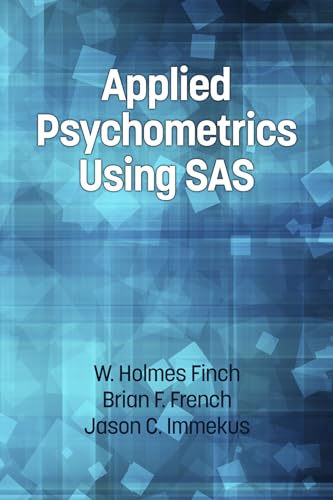
Applied Psychometrics Using SAS
Holmes Finch, Brian F. French, Jason C. Immekus
Mid-Range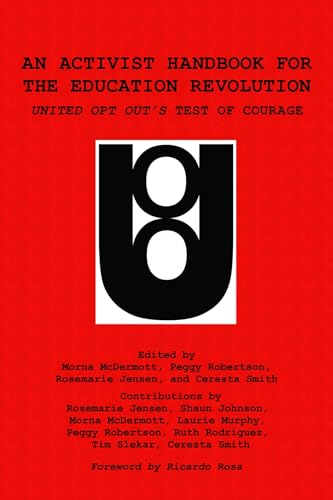
Activist Handbook for the Education Revolution
Morna McDermott, Peggy Robertson, Ceresta Smith, Rosemarie Jensen, Ricardo Rosa
Mid-Range
Developing Inquiry for Learning
Frances Wells
Mid-Range
Assessing Foreign Language Students Spoken Proficiency: Stakeholder Perspectives on Assessment Innovation
Martin East
Mid-Range
The Miseducation of English Learners: A Tale of Three States and Lessons to Be Learned
Grace P. McField
Mid-Range
The Purposes, Practices, and Professionalism of Teacher Reflectivity
Edward G. Pultorak, Sunya T. Collier, Dean Cristol, Sandra Dean, Nancy Fichtman Dana, Donna H. Foss, Rebecca K. Fox, Nancy P. Gallavan, Eric Greenwald, Leah Herner-Patnode, James L. Hoffman, Fred A.J. Korthagen, Barbara Larrivee Hea-Jin Lee, Jane McCarthy, Christie McIntyre, D.John McIntyre, Rejoyce Soukup Milam, Melissa Mosley, Lynn Paine, Walter S. Polka, Linda Quinn, Mistilina Sato, Jason Jude Smith, Anne Rath, Audra Roach, Katie Russell, Kelly Vaughn, Jian Wang, Angela Webster-Smith, Ruth Chung Wei, C Stephen White, Rachel Wlodarksy, Diane Yendol-Hoppey, Martha Young
Mid-Range
Common Core Math Grade 5 Practice Workbooks
Lumos Learning
Mid-Range
Defending Assessment Security in a Digital World
Phillip Dawson
Premium
Testing Times: The Uses and Abuses of Assessment
Gordon Stobart
Premium
Changing Assessments: Alternative Views of Aptitude, Achievement and Instruction
Bernard R. Gifford, Mary Catherine O'Connor
Premium
Assessment as Learning (Asia-Europe Education Dialogue)
Zi Yan, Lan Yang
PremiumRoundups
Frequently Asked Questions
How do I choose the right education assessment book for home comfort & decor topics?
Choose a book that matches your goal (skill-building, curriculum planning, or informal assessment), check the intended audience (teachers, parents, or designers), review the table of contents for relevant topics (assessment methods, rubrics, case studies), and prefer recent editions or authors with credentials in education or the niche
What price range should I expect for education assessment books in this category?
Prices typically vary by depth and format; expect budget options under $50 and more comprehensive or academic texts in the $50–$200 range, with the category average generally around the low hundreds
Which features or content elements are most important when comparing these books?
Look for clear assessment frameworks, sample rubrics or scoring guides, reproducible templates or worksheets, evidence-based strategies, and chapter summaries or practical application sections for use at home or in classroom-like settings
How can I assess the credibility of an author in this niche?
Check the author's professional credentials (education degrees, certifications), prior publications in education or related fields, institutional affiliations, and whether the book cites research or includes references and practitioner-tested examples
Are there specific formats I should prefer (paperback, hardcover, e-book) for assessment work?
Choose format based on use: paperback or hardcover for frequent reference, e-book for portability and searchability, and consider whether the book includes downloadable reproducible materials—those formats can save time when applying assessments
Can these books be used by parents with no formal training in education?
Many assessment books include plain-language explanations, step-by-step tools, and reproducible forms designed for nonprofessionals, but check that the book specifies intended audience and provides practical guidance rather than assuming specialist knowledge
What should I look for regarding updates or edition notes?
Look for edition dates, notes about revised assessment instruments or new research incorporated, and whether the book references current standards or frameworks; newer editions usually address changes in best practices or terminology